Starting a business is one thing. Getting people to find it is another. Whether you sell products, offer a service, or run a local shop, most of your future customers are searching, scrolling and comparing online before they ever spend a penny.
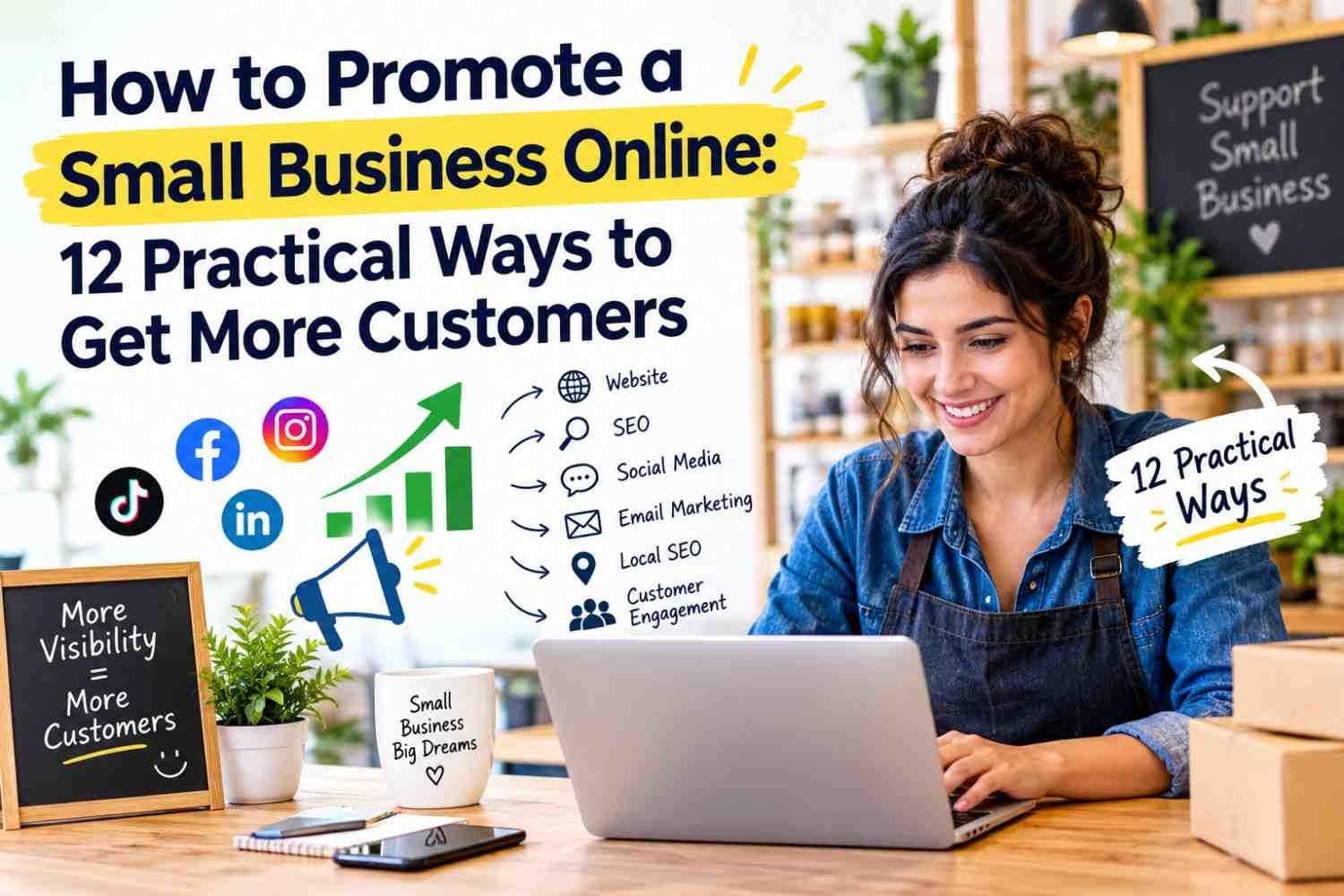
The good news is that you do not need a big budget to promote a small business online. You need a clear plan, a few reliable channels, and the patience to stay consistent. This guide walks you through 12 practical ways to promote your business online, plus a simple 30-day plan to get started.
Before You Start: Get Clear on Your Customer and Your Goal
Most small businesses waste money because they start promoting before answering two basic questions.
Who is your ideal customer?
Write down who you want to reach: their age range, location, problems, and where they spend time online. A bakery owner targeting local families needs a different approach from a freelance accountant targeting other small businesses.
What is your main goal?
Pick one goal for the next three months, for example:
- Get more website visitors
- Collect more enquiries or bookings
- Build an email list
- Increase online sales
A single clear goal helps you choose the right channels and measure whether they are working.
1. Build a Simple, Fast and Mobile-Friendly Website
Your website is the home base for everything else you do online. Social media posts and ads all lead people back to it, so it needs to make a good first impression.
Make sure your website:
- Loads quickly and works well on mobile phones
- Clearly says what you do, who you help and how to contact you within a few seconds
- Has an easy-to-find contact page, phone number or booking button
- Includes an About page, so visitors can see there is a real person or team behind the business
- Uses HTTPS (the padlock in the browser) so visitors feel safe
You do not need anything fancy. A clean, simple site on WordPress, Wix or Shopify is enough to start.
2. Set Up Your Google Business Profile
If you serve customers in a particular area, a free Google Business Profile is one of the most useful things you can do. It helps your business appear in Google Search and Google Maps when people look for services nearby.
To get the most from it:
- Fill in every section: business name, address or service area, opening hours, phone number and website
- Choose the right business category
- Add clear, real photos of your products, premises or team
- Keep your details up to date, especially holiday hours
- Reply to customer questions and reviews
An incomplete profile gives competitors an easy advantage, so spend an hour getting yours right.
3. Learn the Basics of SEO (Search Engine Optimisation)
SEO is the process of helping your website show up when people search on Google. It takes time, but unlike ads, the traffic does not stop the moment you stop paying.
Start with keyword research
Keywords are the phrases people type into Google. Think about what your customers would search for, such as “emergency plumber in Leeds” or “handmade soy candles”. Free tools like Google Keyword Planner, Google autocomplete and the “People also ask” box can give you ideas.
Optimise your key pages
For each important page:
- Put the main keyword naturally in the page title, the main heading and the first paragraph
- Write a clear meta description that makes people want to click
- Use descriptive headings and short paragraphs
- Add useful internal links to related pages
- Add alt text to images
Focus on helpful content
Google’s goal is to show people the most helpful results. Write for real people, answer their questions honestly, and avoid stuffing pages with keywords.
4. Start a Blog and Share Useful Content
Content marketing means creating helpful material that attracts the people you want as customers. For most small businesses, the easiest way to start is a blog.
Good blog ideas include:
- Answers to questions customers ask you again and again
- Step-by-step guides related to your product or service
- Comparisons, buying guides and checklists
- Case studies and customer stories
Each article is another chance to show up in search results, and it builds trust with readers before they ever contact you. Aim for quality over quantity: one genuinely useful post a week beats five thin ones.
5. Use Social Media, But Pick Your Platforms Carefully
You do not need to be everywhere. It is better to do one or two platforms well than six badly.
Choose where your customers actually are
- Instagram and TikTok: strong for visual products, food, beauty, fashion and creative services
- Facebook: useful for local businesses, groups and community-based audiences
- LinkedIn: best for B2B services, consultants and professional services
- Pinterest: good for home, craft, fashion, food and wedding-related businesses
- YouTube: ideal for tutorials, demonstrations and in-depth advice
Be consistent and be human
Post on a regular schedule, show the people and process behind your business, and respond to comments and messages promptly. Short videos showing how you make or deliver something often perform well because they feel real.
6. Build an Email List and Use Email Marketing
Social media platforms can change their rules or reach overnight. An email list is an audience you own.
To build one:
- Offer something useful in return for a sign-up, such as a discount, checklist or short guide
- Add a sign-up form to your website, blog posts and social profiles
- Send a simple welcome email, then share tips, news and offers on a regular schedule
Only email people who have agreed to hear from you. If you are in the UK or EU, data protection rules (UK GDPR and PECR) require clear consent and an easy way to unsubscribe. Tools like Mailchimp, Brevo and MailerLite have free plans suitable for beginners.
7. Try Paid Advertising With a Small, Controlled Budget
Ads can bring faster results while your SEO and content grow. The key is to start small and track everything.
- Google Ads: reach people actively searching for what you offer
- Meta Ads (Facebook and Instagram): target people by location, interests and behaviour
Set a daily budget you can afford, run one simple campaign with a clear offer, and send visitors to a page built for that offer. Check results after a week or two and stop anything that is not bringing in enquiries or sales.
8. Collect and Display Customer Reviews
People trust other customers more than they trust your own marketing. Positive reviews can influence both buying decisions and local search visibility.
- Ask happy customers for a review straight after a good experience
- Make it easy by sharing a direct link to your Google Business Profile or review page
- Reply to every review, including negative ones, politely and professionally
- Show testimonials on your website, ideally with a name and a photo where the customer agrees
Never buy fake reviews or write them yourself. It breaks the rules of most platforms and can damage your reputation.
9. Partner With Other Businesses and Creators
Collaboration lets you reach new audiences without a large budget.
- Team up with a complementary business, for example a wedding florist and a photographer, to cross-promote
- Offer to write a guest article for a relevant blog or industry website
- Work with local creators or micro-influencers who genuinely suit your brand
- Sponsor or join local online events and community groups
Choose partners whose audience matches yours, and always aim for something that benefits both sides.
10. List Your Business in Trusted Online Directories
Listings help customers find you and send useful signals about your business. Start with:
- Google Business Profile and Bing Places
- Industry-specific directories and trade bodies
- Local chamber of commerce or town business listings
- Review platforms relevant to your sector
Keep your name, address and phone number identical everywhere. Inconsistent details can confuse both customers and search engines.
11. Use Video to Show What You Do
Video helps people understand your business quickly. You do not need professional equipment; a modern smartphone is enough.
Simple video ideas:
- A quick tour of your workspace or shop
- How-to demonstrations of your product
- Answers to common customer questions
- Behind-the-scenes clips and customer stories
Post them on your website, YouTube and social platforms to get more from every video.
12. Track Your Results and Improve
Promotion without measurement is guesswork. Set up these free tools early:
- Google Analytics: shows how many people visit your site and what they do there
- Google Search Console: shows which searches bring people to your site and highlights technical issues
- Platform insights: each social and email tool shows what content gets attention
Review your numbers once a month. Do more of what brings visitors and customers, and drop what does not.
Common Mistakes to Avoid
- Trying every channel at once instead of mastering a few
- Copying competitors instead of showing what makes you different
- Ignoring mobile users
- Posting only promotions and never offering anything useful
- Giving up too early, since SEO and content usually take months to show results
- Not having a clear call to action, such as “Book now” or “Contact us”
A Simple 30-Day Plan to Get Started
Week 1: Foundations Define your ideal customer and goal. Tidy your website, make sure contact details are clear, and claim your Google Business Profile.
Week 2: Visibility Choose one or two social platforms and set up complete profiles. Submit your site to Google Search Console and list your business in a few trusted directories.
Week 3: Content and Trust Publish your first two helpful blog posts. Ask five happy customers for reviews. Add an email sign-up form to your site.
Week 4: Growth Send your first email, try a small test ad if budget allows, and review your analytics to see what worked.
Frequently Asked Questions
How can I promote my small business online for free?
Start with a Google Business Profile, regular social media posts, helpful blog content, customer reviews and email sign-ups. These cost time rather than money and can bring steady results.
How long does online promotion take to work?
Paid ads and social campaigns can bring visitors within days. SEO and content marketing usually take a few months to build momentum, so be patient and consistent.
Which online marketing channel is best for a small business?
There is no single best channel. Local service businesses often benefit most from Google Business Profile and reviews, while online shops may do better with social media, email and SEO. Start with the places your customers already spend time.
Do I need a website to promote my business online?
A website is strongly recommended. Social profiles are useful, but a website gives you a professional home base that you control and that can appear in Google search results.
How much should a small business spend on online marketing?
There is no fixed figure. You can begin with free methods and add a small ad budget once you know what your customers respond to. Increase spending only on what is clearly working.
Final Thoughts
Promoting a small business online is not about doing everything. It is about choosing a few effective channels, creating genuinely useful content, and showing up consistently. Start with a solid website and Google Business Profile, add one or two channels that suit your customers, and review your results every month.
Small, steady steps add up. Pick one idea from this guide and start today.