By Magazine Reader
Starting with social media can feel overwhelming. There are many platforms, new features appear constantly, and every expert seems to give different advice. The good news is that you do not need a big budget or a large team to get started. You need a clear plan.
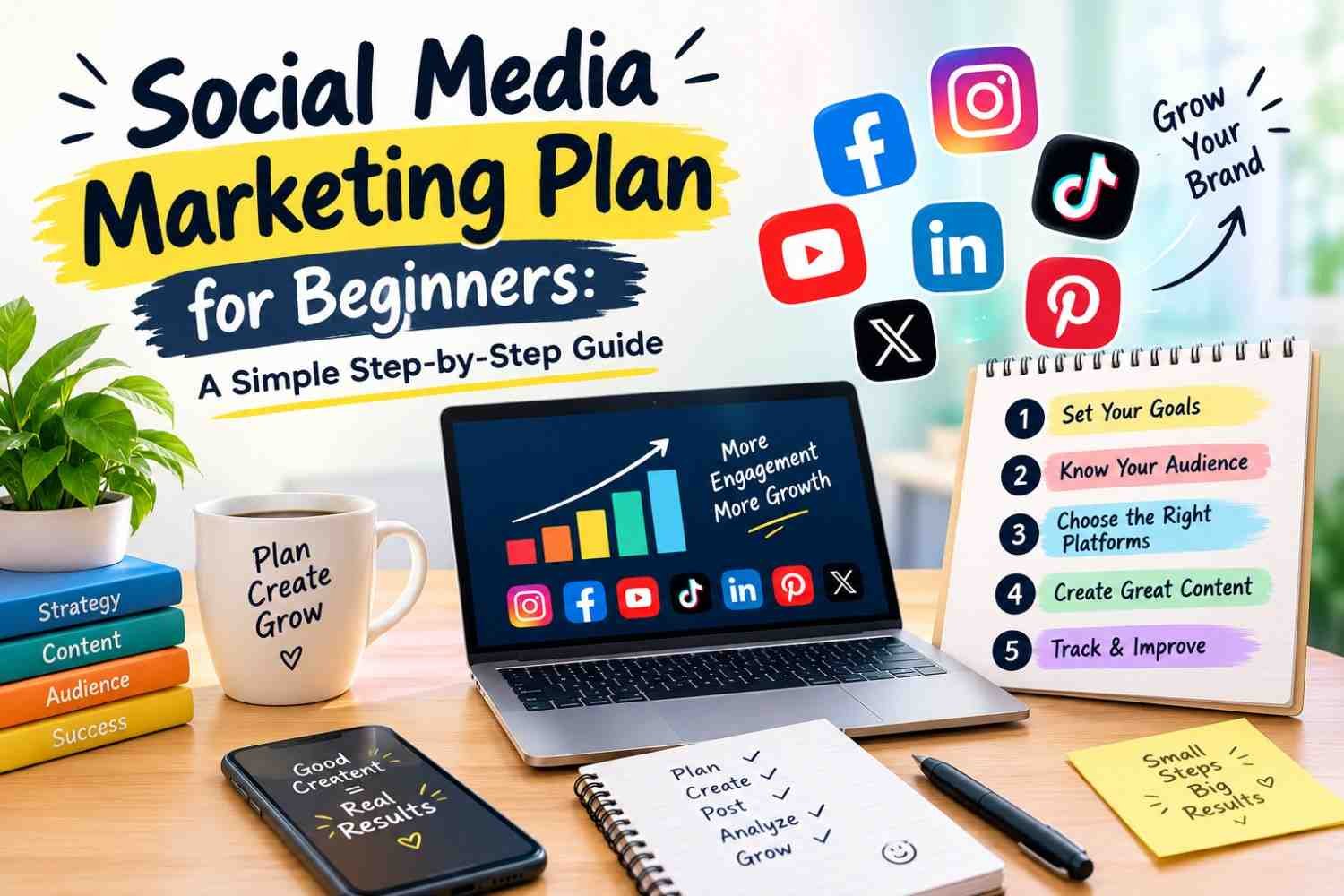
This guide walks you through a social media marketing plan for beginners, one step at a time. By the end, you will know how to set goals, choose the right platforms, plan your content, and measure your results.
What Is a Social Media Marketing Plan?
A social media marketing plan is a written document that explains what you want to achieve on social media, who you want to reach, what you will post, and how you will measure success. Think of it as a roadmap. Without one, most beginners post randomly, lose motivation, and see little progress.
Why Beginners Need a Plan
- It saves time. You know what to post and when, so you are not starting from zero every day.
- It keeps you consistent. Consistency matters because audiences remember brands that show up regularly.
- It makes results measurable. Goals let you see what works and what does not.
- It prevents wasted effort. You focus only on platforms and content that suit your audience.
Step 1: Set Clear and Realistic Goals
Every good plan starts with a goal. Instead of saying “I want more followers,” choose something specific that supports your business or website.
Use the SMART Goal Method
SMART goals are Specific, Measurable, Achievable, Relevant, and Time-bound.
- Weak goal: “I want to grow on Instagram.”
- SMART goal: “I want to publish 3 posts per week on Instagram and send 200 visitors to my website within 90 days.”
Common Goals for Beginners
- Build brand awareness
- Drive traffic to your website or blog
- Generate leads or enquiries
- Build a community around your niche
- Provide customer support
Pick one or two goals at first. Trying to achieve everything at once is a common beginner mistake.
Step 2: Understand Your Target Audience
You cannot create useful content if you do not know who it is for. Take time to describe your ideal audience.
Questions to Ask About Your Audience
- Who are they (age range, location, job, interests)?
- What problems do they want solved?
- Which platforms do they already use?
- What type of content do they enjoy: short videos, images, articles, or discussions?
Create a Simple Audience Profile
Write a short description of one typical person in your audience. For example: “A small business owner who wants to attract more customers online but has limited time and budget.” Keep this profile in front of you whenever you plan content.
Step 3: Choose the Right Social Media Platforms
You do not need to be on every platform. It is better to do two platforms well than six platforms poorly. Choose based on where your audience spends time and what kind of content you can create consistently.
A Quick Overview of Popular Platforms
- Facebook: Useful for communities, local businesses, groups, and a wide age range.
- Instagram: Strong for visual content such as photos, Reels, and Stories.
- TikTok: Built around short-form video and discovery of new creators.
- LinkedIn: Best for professional networking, B2B marketing, and career-related content.
- YouTube: Ideal for longer videos, tutorials, and content that stays useful over time.
- Pinterest: Works like a visual search engine and can send steady traffic to blogs and online stores.
- X (formerly Twitter): Good for quick updates, news, and conversations.
How to Decide
- List the platforms where your audience is active.
- Check which content formats you can realistically create.
- Start with one or two platforms.
- Expand only after you build a steady routine.
Step 4: Optimise Your Profiles
Your profile is often the first thing people see, so make it clear and professional.
Profile Checklist
- Use a clear profile photo or logo.
- Write a short bio that explains who you help and how.
- Add a link to your website.
- Use the same name and visual style across platforms so people recognise you.
- Include a call to action, such as “Visit our blog” or “Send us a message.”
Step 5: Plan Your Content Strategy
Content is the heart of your plan. A good content strategy balances value, personality, and promotion.
Choose Your Content Pillars
Content pillars are 3 to 5 main topics you will post about regularly. For a digital marketing website, pillars might be:
- SEO tips
- Social media how-tos
- Business tools and reviews
- Small business advice
- Behind-the-scenes updates
Mix Different Types of Content
- Educational: Tips, tutorials, checklists, and how-to guides
- Entertaining: Relatable posts, trends relevant to your niche, short videos
- Inspirational: Success stories, quotes, case studies
- Promotional: Product, service, or blog post announcements
A commonly used guideline is the 80/20 rule: about 80 percent helpful or entertaining content and about 20 percent promotion. It is a guideline, not a strict rule, but it helps you avoid sounding like constant advertising.
Repurpose Your Content
One blog post can become several pieces of content: a short video, an image with key tips, a carousel, a quote graphic, and a discussion question. Repurposing saves time and keeps your message consistent.
Step 6: Create a Posting Schedule
Consistency beats intensity. It is better to post three times a week for six months than daily for two weeks and then stop.
Build a Simple Content Calendar
A content calendar can be a spreadsheet or a free planning tool. Include these columns:
- Date and time
- Platform
- Content type (image, video, text, link)
- Topic or content pillar
- Caption and hashtags
- Status (idea, draft, scheduled, published)
How Often Should Beginners Post?
There is no single perfect number, because it depends on the platform and your available time. A realistic starting point is 3 to 4 posts per week on one or two platforms. You can increase frequency once you have a routine. Check your own analytics to learn when your audience is most active rather than relying only on generic “best time to post” charts.
Step 7: Engage With Your Audience
Social media is not a one-way broadcast. People expect brands to respond and interact.
Ways to Build Engagement
- Reply to comments and messages promptly.
- Ask questions in your captions.
- Share user comments or feedback with permission.
- Join conversations in groups and communities related to your niche.
- Follow and interact with other accounts in your industry.
Genuine conversations build trust, and trust is what turns followers into customers or loyal readers.
Step 8: Use Helpful (and Often Free) Tools
You do not need expensive software to begin. Many platforms offer free versions or free plans, though features and limits can change, so check each tool’s current pricing page.
- Design: Canva for graphics, templates, and simple videos
- Scheduling: Meta Business Suite for Facebook and Instagram, or tools such as Buffer and Later
- Analytics: Built-in analytics on each platform, plus Google Analytics to track website traffic
- Planning: Google Sheets, Notion, or Trello for content calendars and idea lists
Step 9: Track and Measure Your Results
Measuring results tells you what to keep, change, or stop.
Key Metrics for Beginners
- Reach and impressions: How many people saw your content
- Engagement rate: Likes, comments, shares, and saves compared with your audience size or reach
- Click-through rate (CTR): How many people clicked your link
- Website traffic from social media: Visible in Google Analytics
- Conversions: Sign-ups, enquiries, or sales that came from social media
- Follower growth: Useful, but less important than engagement and conversions
Review Monthly
At the end of each month, ask:
- Which posts performed best, and why?
- Which platform sent the most traffic or enquiries?
- What should I post more of, and what should I stop posting?
Use the answers to improve next month’s plan.
Common Social Media Mistakes Beginners Should Avoid
- Being on too many platforms at once. Start small and grow.
- Posting without a goal. Every post should have a purpose.
- Only promoting. Constant selling pushes people away.
- Ignoring comments and messages. Engagement is part of the strategy.
- Buying followers. Fake followers do not engage, hurt your credibility, and can violate platform rules.
- Giving up too early. Social media growth usually takes months, not days.
- Copying others exactly. Learn from competitors, but keep your own voice.
A Simple 30-Day Starter Plan
Week 1: Foundation
- Define your goals and audience.
- Choose one or two platforms.
- Set up and optimise your profiles.
Week 2: Planning
- Choose 3 to 5 content pillars.
- Build a content calendar.
- Prepare your first batch of posts.
Week 3: Publishing and Engagement
- Start posting on your schedule.
- Reply to every comment and message.
- Interact with other accounts in your niche.
Week 4: Review and Improve
- Check your analytics.
- Identify your best-performing content.
- Adjust the next month’s plan.
Frequently Asked Questions
How much time does social media marketing take for a beginner?
Many beginners can manage with a few hours per week if they plan and batch their content. The exact time depends on how many platforms you use and what type of content you create.
Do I need a budget to start?
No. You can start organically with free tools and your own content. Paid advertising can be added later once you understand what your audience responds to.
How long does it take to see results?
It varies by niche, platform, and consistency. Most people need several weeks or months of regular posting and engagement before seeing steady progress, so patience is important.
Which social media platform is best for beginners?
There is no single best platform. The best choice is the one where your audience is active and where you can create content consistently.
Should I hire a social media manager?
Not necessarily at the start. Learning the basics yourself helps you understand what you need. You can outsource later as your business grows.
Conclusion
A successful social media marketing plan for beginners does not need to be complicated. Set clear goals, understand your audience, choose one or two platforms, plan useful content, stay consistent, and review your results every month. Start small, learn from your data, and improve step by step. With patience and a clear plan, social media can become a reliable way to grow your brand, your website, or your business.